Case study
Terraform deploy and manage from a single point
One hosted dashboard for Terraform plans, SSH deploys and day-two ops — without agents on every box.
Context
Infrastructure as code lived in Terraform state and CI pipelines. Application releases and emergency shells still lived in ad-hoc SSH. The team needed one place to run Terraform-related playbooks, ship app releases and open a terminal — without installing agents on every host.
Terraform already defined networks and VMs. What lagged was the human path after apply: connecting to new hosts, seeding secrets, deploying the first release and verifying health.
Spreading that across CI jobs, local Terraform CLI and personal SSH configs made onboarding slow and audits painful.
Before
When a new environment appeared from Terraform, someone still had to wire deploy keys, copy env files and remember the healthcheck URL. That gap between “infra exists” and “app is live” was where most incidents started.
- Terraform apply in CI, then manual SSH for the first deploy
- State and deploy keys split across repos and laptops
- No single view of which hosts were ready for a release
- Day-two changes meant hunting the right pipeline or shell
Why PlainShip
PlainShip does not replace Terraform. It sits beside it: after hosts exist, the same dashboard runs bootstrap playbooks, stores secrets, ships releases and keeps a rollback path humans can see.
- Agentless SSH matches hosts Terraform already provisioned
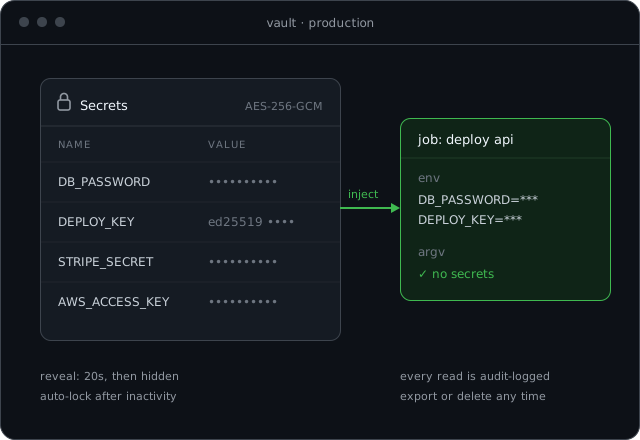
- Vault holds cloud and deploy credentials in one place
- Playbooks cover bootstrap after apply; atomic releases ship the app
- Browser terminal for day-two without local SSH sprawl
Setup on app.plainship.dev
- 01
Imported SSH access for Terraform-managed hosts into a PlainShip project
- 02
Stored cloud tokens and deploy keys in the AES-256 vault
- 03
Added playbooks for bootstrap (packages, users, healthcheck endpoints)
- 04
Connected app repos for atomic releases with one-click rollback
Staging and production host groups mirror Terraform workspaces, so a dry-run playbook on staging uses the same steps production will run.
Schedules on Pro watch health after apply windows — failures email on-call instead of waiting for someone to notice a dashboard.
After
- 1Dashboard for Terraform hosts + app deploys
- 0Agents added on provisioned servers
- < 1 dayFrom new host apply to first release
New environments stop feeling like two products. Infra still comes from Terraform; ship, shell and secrets live in PlainShip — one point of control for day-two ops.
What we learned
- Keep Terraform for provision; keep a dashboard for human ops on SSH.
- Bootstrap playbooks close the gap between apply and first deploy.
- A shared vault beats copying cloud keys into every pipeline.
- Atomic releases still matter after the VMs exist.
“Terraform builds the boxes. PlainShip is where we actually ship and stay on-call — from one place.”